

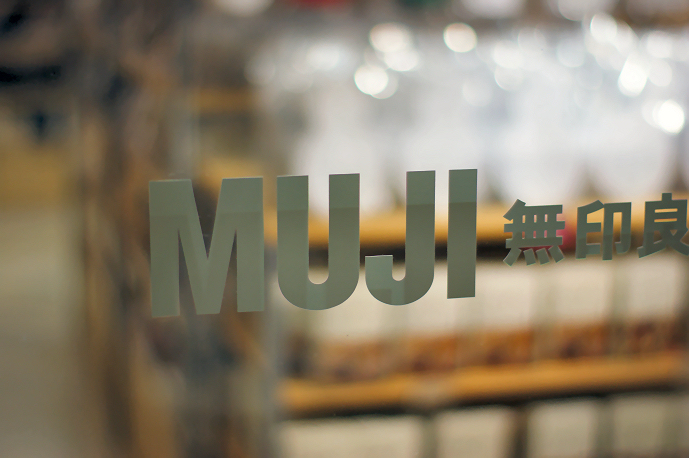
From Muji to Uniqlo, Japan has turned calmness into a global export – a form of soft power (photo: SoonKoon/flickr)
Writen By: Aya Miyoshi Barnett
TOKYO — Japan has transformed “soft aesthtics” like minimalism, restraint, and calmness into a global branding strategy and soft cultural power. Through companies such as Muji and Uniqlo, Japan has been able to export not only products but also carefully curated emotional experiences which largely shape its global image. A contrast to Western forms of more aggressive consumer branding.
From Tokyo to Paris, the Japanese aesthetic is instantly recognizable: muted palettes, uncluttered packaging. It is a deliberately silent presentation that stands out in an era of digital overstimulation. Japan’s silent competitive advantage has become its marketable identity.
The Construction of a Soft Aesthetic
The phrase itself, “soft aesthetic,” is not a marketing term. Instead, it describes a cluster of values such as harmony, collective comfort, and emotional restraint. All of which have long been embedded in Japanese social and cultural life. What distinguishes Japan from other countries that have similar values is that Japan systematized and commercialized these values in order for them to reach consumers on every continent.
Concepts like wabi-sabi, which accept imperfection and transience, and the use of negative space demonstrate how deeply aesthetic values have influenced everyday commercial life. What began as philosophical and artistic ideas now influences everything from product design to advertising. Because of this, Japan’s national image rarely feels manufactured; it is an extension of a broader way of seeing and organizing the world.
This coherence was not accidental. It reflects broader social values in Japan, particularly the tendency to discourage individualism and emphasize emotional restraint, harmony, and subtlety. As these cultural preferences entered the commercial sphere, they shaped brands that do not compete for attention through loud messaging or aggressive self-promotion. Instead, companies such as Muji and Uniqlo built their identities around simplicity, consistency, and understated design.
From Culture to Commerce: Muji and Uniqlo
No company exemplifies Japan’s commercial translation of softness more accurately than Muji, a brand founded in 1980 as a rejection of branded consumerism. Muji’s name comes from Mujirushi Ryohin, meaning “no-brand quality goods,” a declaration of what they sell: the absence of excess. Their lack of a logo is their identity and branding strategy. And their global expansion proves that it works.
Muji doesn’t sell luxury like most brands. Instead, it markets emotional relief. Their stores’ interiors, with low shelving, natural materials, and unobtrusive lighting, imply products will not elevate your life but simplify it. This transaction between brand and consumer differs fundamentally from the usual one among Western consumer brands. Products are built for function rather than following trends. Quality is guaranteed without market pressure, providing stability. Uniqlo acts similarly, establishing itself as a store with clean, orderly, and deliberately basic clothes that are well-engineered and consistently represented. The brand promises reliable consistency: products work, last, and will be there next season or whenever
you need them.
Why the Soft Aesthetic Works Globally
The global popularity of the Japanese aesthetic is not just a trend. It is a cultural response to a specific set of conditions: relentless overstimulation of social media, accelerated news cycles, algorithmic content designed to maximize agitation, and a consumer landscape so highly saturated that brands need to compete through volume and urgency.
In this chaotic environment, calmness is a scarce commodity. Japanese branding offers something the broader media landscape withholds: slowness, order, and emotional decompression. Muji and Uniqlo’s simple products are, in a sense, a creation of space to just be in a world that seems to have forgotten how to leave room in life.
Japanese companies were faster than many of their Western competitors to realize this shift in consumer psychology. Taking advantage, they offered less rather than more, and they did so with curated precision that created its own form of luxury. In strategic terms, Japanese branding offers consumers a sense of calm and predictability in an increasingly crowded and fast-moving media environment.
The Two Approaches: Japan vs. the United States
The contrast between American and Japanese branding culture is so striking that it is enough to function as a comparative case study in consumer psychology. American branding, broadly put, is built on intensity. It competes for attention through volume, personality, and emotional intensity. Celebrity endorsements, confrontational advertising, and maximalist visual designs define its dominant mode. This is further reinforced through American media such as cable news networks. Social media platforms reward high-performance provocation posts, and entertainment franchises are built for spectacles. The economy thrives on stimulation and attention.
Japanese branding competes through restraint. The atmospheric, slow, wordless advertising and harmonic retail environment focuses on how their consumers want to feel rather than who they want to be like American brands. The orientation is towards emotional state rather than social identity.
Neither approach is inherently superior. However, the global traction of Japanese aesthetics in recent years suggests that the appetite for emotional restraint, underserved by Western consumer culture, is substantial and growing by the day.
Soft Aesthetic as Soft Power
The political scientist Joseph Nye defined soft power as the ability to shape the preferences of others through attraction and persuasion rather than coercion. By that measure, Japan’s global branding apparatus is one of the more effective soft power instruments of the past three decades.
The same pattern can be seen in Uniqlo’s global success. The popularity of Japanese cafés, the appeal of Japanese stationery, and the influence of Japanese architecture and interior design all reflect a similar set of values. Together, they have helped shape contemporary aesthetic preferences around the world. Rather than exporting a specific political message, Japan exports a particular way of approaching everyday life, one that many consumers increasingly find attractive, especially when living in turbulent economic situations.
Japan has been particularly effective at cultivating this kind of influence. Rather than promoting disconnected images or trends, many of its most recognizable brands communicate similar values. This consistency has helped create a national image that feels both distinctive and authentic, allowing Japanese cultural influence to remain relevant even as consumer tastes change.
The Marketability of Calmness
In many ways, these brands demonstrate how aesthetic traditions can become economic assets. Ideas that developed over centuries have been adapted into retail environments, product design, and branding strategies that resonate with consumers around the world. At a time when many companies compete for attention through louder advertising and faster trend cycles, the appeal of Japanese brands suggests that there is also value in offering predictability, calm, and reliability. The success of Muji and Uniqlo shows that these qualities are not simply cultural preferences; they can also be a source of lasting global influence.


Leave a Reply