
Exclusive
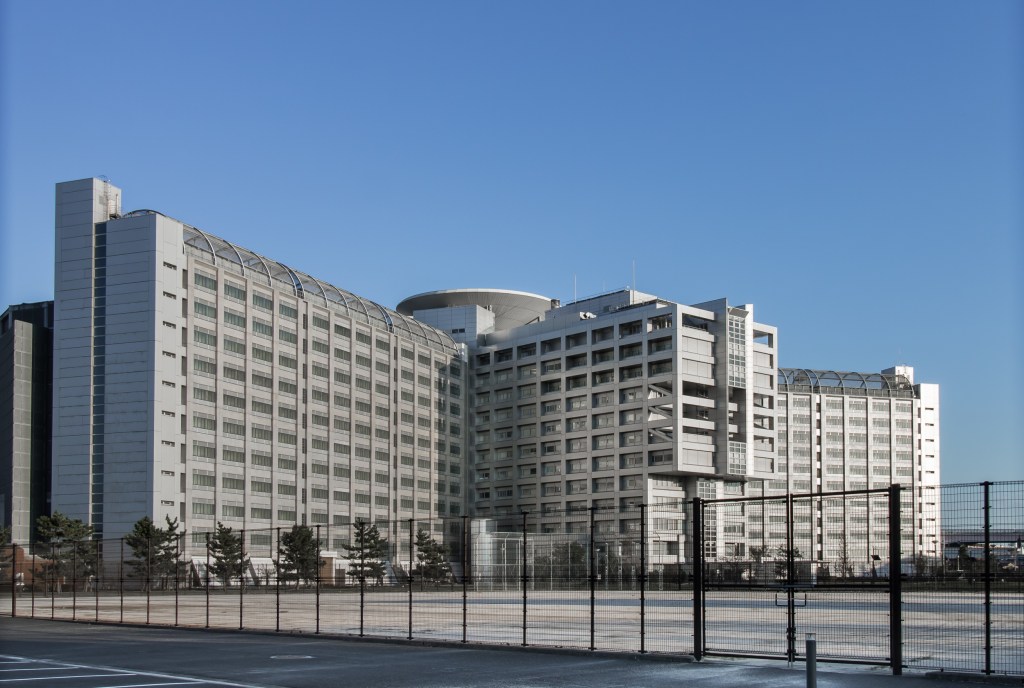
Tokyo Detention Center, where defendant Christopher Stephan Payne is currently being held, awaiting a court ruling, Kosuge, Tokyo (Wikimedia/Kakidai)

TOKYO — The Tokyo High Court will issue a ruling on Thursday, Dec. 11, in the appeal of a case alleging a wrongful conviction and flawed DNA analysis.
Christopher Stephan Payne was convicted of sexual assault and sentenced to eight years in prison by the Chiba District Court on July 9, 2024. DNA evidence linking him to a 2018 attack was central to the verdict, according to court documents.
The case was moved to the Tokyo High Court after Payne and his legal team appealed the ruling, arguing that DNA evidence had been misinterpreted and that key statistical calculations were flawed, according to the defendant. Since 2023, Payne’s defense has been supported by the Innocence Project Japan (IPJ), a non-profit working to prevent and overturn wrongful convictions through DNA and other scientific testing.
After the appeal began, experts working with the IPJ advised the defense to obtain raw data from the DNA analysis. Based on the data received, the defense now claims that the DNA analysis was flawed, citing unexplained edits to the electropherograms, among other irregularities. Defense attorneys say the new findings raise the stakes of the appeal, shifting it from a dispute over evidence interpretation, to allegations of improper handling of forensic data with potential implications for Japan’s justice system.
On July 12, 2018, shortly after midnight, a young woman was walking home in Ichikawa City, Chiba Prefecture, when she was attacked by a man. According to court records, the attacker threatened her by saying “I have a knife” and proceeded to strangle the victim and force her to perform oral intercourse. The attacker fled the scene shortly after.
The victim spat the attacker’s semen out, gargled and rinsed her mouth at home, and then went to the police where a DNA sample was taken, according to the IPJ. The organization’s report shows that the police were only able to obtain a trace sample containing a mixture of the attacker and the victim’s cells. The limited sample has complicated DNA analyses conducted since.
In an unrelated February 2020 incident, Payne was arrested after entering a residence while drunk in Yamanashi Prefecture and falling asleep in the entryway. Before releasing him, the police asked for a voluntary DNA swab, which Payne agreed to provide, the IPJ said.
Once the voluntary DNA sample was processed and uploaded to the national police database, Payne was flagged as a possible suspect, court documents show.
In November 2021, Payne was arrested by the Chiba Prefectural Police and later “indicted on the grounds that his DNA profile was ‘consistent’ with that of the [2018] attacker’s,” said the IPJ.
Initially set for January 16, 2023, the trial was rescheduled for June 2024 after Payne changed counsel when private attorneys working with the IPJ were appointed, the organization said. Before that, he had been represented by court-appointed lawyers.
On July 9, 2024, the Chiba District Court delivered a guilty verdict, convicting Payne of forced sexual intercourse resulting in injury, and sentencing him to eight years in prison with hard labor, the official judgment summary shows.
According to Percival, one of the coordinators of the advocacy campaign Justice4ChrisPayne, Payne spent approximately two years and nine months in solitary confinement between his arrest and the first ruling. Payne later confirmed this to the Journal. He remains held in solitary confinement while awaiting a conclusion to his appeal.
According to court documents, the ruling relied heavily on a second analysis conducted externally by “Professor Y”, a forensic expert whose identity remains undisclosed, which reported a very high statistical likelihood that the DNA recovered from the victim was a match with Payne’s.
The initial DNA analysis, conducted by the Chiba Prefectural Police forensic laboratory, failed to isolate sperm DNA through the differential extraction method and the sample was treated as a mixture, according to court documents. The analysis resulted in an occurrence frequency of 1 in 95,047,826 individuals, court documents show. Payne said the defense requested a second analysis, arguing that the failed differential extraction and the probability calculation raised concerns about the reliability of the results.
Given the defense’s concerns, the court requested an external retest of the 2018 sample, conducted by Professor Y, according to court documents. The second test examined both mitochondrial DNA and autosomal DNA, using the GlobalFilerTM kit to analyze 24 genetic loci, compared with the 16 loci tested in the initial police analysis, according to the records. In forensic DNA analyses, loci refers to specific positions on a chromosome where particular genetic markers are measured.
Court records show that the second test was unable to detect any mitochondrial DNA from the attacker and identified only the victim’s. Professor Y’s autosomal analysis identified 15 out of 24 loci, the judgement summary states. The summary added that “the detected DNA types include the DNA types of the defendant or the victim, but there are no types that do not correspond to the DNA types of the defendant or the victim.” Court documents also list three occurrence frequency calculations based on different population databases and assumptions: approximately one in 17 trillion people, one in 446 quadrillion people, and one in 264 billion people.
Payne’s alibi also became a point of contention during the initial trial. He says he was working that night at his job at the Tokyo Fight Club (TFC), where he performed as a fighter and often worked past midnight, according to Percival. The defense argues Payne worked until 5 a.m. the next morning. Court documents show that while it was confirmed that Payne was working from 6 p.m., there is no record of the time he left the establishment.
Given the nearly six year gap between the attack and the trial, confirming Payne’s alleged alibi proved difficult for the court. Court document show that Payne’s former manager at TFC testified about his time of departure but was unable to recall any specific details from that night. The documents state that his testimony changed over time. Judges ultimately found the testimony unreliable, the judgement summary shows.
The defense argues that police did not attempt to obtain IP address or location data at the time of Payne’s arrest, according to court documents. The documents show that his legal team later sought cell-phone location records from the night of the attack but were unable to recover usable data due to the time that had passed.
On July 9, 2024, the court found Payne guilty of the 2018 assault. The judgement summary states that the occurrence frequencies reported in the second DNA analysis, together with the absence of corroborating evidence for Payne’s alibi, were central to the court’s conclusion.
According to the IPJ, Payne and his legal team promptly appealed the ruling. The case was transferred to the Tokyo High Court, and Payne, who had been held in a Chiba facility, was moved to the Tokyo Detention Center to await the appeal, according to the defendant.
The defense’s appeal initially focused on alleged flaws in the occurrence frequency calculations and what is descried as misinterpretation of the autosomal DNA analysis. Payne argues that his mixed ethnic background was not duly taken into consideration in the statistical calculations. Court documents show that while African American population databases were used in some of the estimates, his Greek ethnicity was not included in the calculations conducted by Professor Y. The IPJ has also argued that Payne’s DNA profile was described as “consistent” with the attacker’s, but not a definitive “match.” Court documents state that all analyses were conducted on a mixed sample, containing DNA from both the attacker and the victim, and that the attacker’s full DNA profile was never identified. The IPJ contends that the partial nature of the profile means it cannot be used as a proof of guilt.
While these concerns were raised during the initial trial, the Chiba District Court found Professor Y’s methods to be appropriate, according to court documents. The records show that Professor Y and the initial police analyst testified that “difference in gene frequency between race/ethnicities is small.” The judges concluded that Professor Y’s use of African American and Japanese population databases were acceptable, the judgment summary states.
Court documents show that judges regarded the analyses and calculations by Professor Y and the initial police analyst as “fully reliable,” citing their “sufficient knowledge and experience in DNA typing.” According to Kota Handa, a supporter of Payne and father of his then girlfriend, Payne’s court-appointed attorneys initially advised him to plead guilty after hearing that Professor Y had conducted the second analysis and reviewing the reported figures. Handa said the attorneys viewed Professor Y as possibly the “foremost expert” in forensic DNA testing in Japan. Professor Y’s university states that he has contributed to more than 1,000 police investigations, and Payne said Professor Y has stated he has contributed to “1,227 mostly criminal trials.”
The appeal has since broadened, as the defense now focuses on the way Professor Y conducted the analysis. Working with Dr. Simon Ford, principal of Lexigen Science and Law Consultants and expert in forensic and environmental applications of DNA, the defense reviewed Professor Y’s analysis.
In his initial review of the electropherograms submitted as evidence in court, Dr. Ford stated he was “concerned that [they] showed signs of having been edited manually.” He said he advised the defense to request the raw data from Professor Y’s analysis. That data was later obtained and sent to Dr. Ford for review. “There are substantial and serious problems with the testing,” he said, summarizing his assessment of Professor Y’s analysis.
Regarding to the testing process, Dr. Ford said that Professor Y’s decision not to use differential extraction was a “poor choice of strategy,” noting that the method would have allowed the attacker’s DNA to be separated from the victim’s. Dr. Ford said Professor Y explained that he avoided differential extraction to conserve the limited sample, but Ford argued that more DNA was ultimately consumed through the subsequent testing steps. He also wrote that Professor Y did not quantify the DNA extracted from the oral swab, calling it “critical to add the correct amount of input DNA to the PCR reaction,” which he described as finding the “sweet spot.” According to Dr. Ford, Professor Y repeated the test multiple times to identify the optimal amount through trial and error. “These deficiencies clearly contributed to the ambiguity of the DNA profiles,” Dr. Ford stated.
Dr. Ford also criticized Professor Y’s use of controls, stating that “critical controls were missing … and other controls … frequently failed.”
Dr. Ford said he was concerned that Professor Y had interpreted the electropherograms “in an arbitrary way.” Electropherograms are visual charts that display DNA peak patterns used to determine genetic profiles. These charts can also show ‘stutter,’ a common artifact in which extra peaks appear due to the DNA amplification process, and must be distinguished from real genetic signals. Dr. Ford said that by recreating the testing conditions used by Professor Y, he was able to identify several peaks that appeared to have been edited without explanation.
Dr. Ford’s comments focus on two peaks that the software had flagged as stutter but that were labeled as allele calls — peaks interpreted as real genetic markers — in Professor Y’s final electropherograms. Ford says he was able to perform calculations using the peak heights and concluded that they do not exceed the stutter threshold. He also reported that the software identified a third peak as an allele in his own testing, which he said did not correspond to either Payne’s or the victim’s DNA profile. According to Ford, the peak did not appear in Professor Y’s final electropherogram, and he suggests it may have been removed manually. Lastly, Dr. Ford added that the electropherograms were printed in zoom view, which he said “gives the optical illusion that low-level peaks … are taller than they actually are.”
Dr. Ford said that Professor Y “edited and modified data extensively, but did not document the change that he made.” Ford said that while peaks and artifacts are often a part of DNA interpretations, any modifications must be documented. “Some of these changes are critical, because they make a difference between the defendant being potentially included or excluded at a locus,” he said. Summarizing his review, Ford described the way the DNA evidence was presented in this case as “deceptive.”
With new evidence submitted by the defense and the prosecution’s response now on record, the Tokyo High Court is set to issue its ruling on Thursday, Dec. 11. A demonstration organized by supporters of Payne is scheduled to take place outside the courthouse during the hearing. Defense attorneys note that the outcome could carry broader implications, given the role of Professor Y in numerous past convictions
 Japan Foreign Journal | 日本国際ジャーナル